
The interns’ parting blog: Our reflections three months later

Time flies when you’re having fun! MillaMay and Nick have been with us throughout the summer, working on everything from business strategy to client projects. And while they’re both staying on with us in different ways, we sat them down once more to find out how they found the last three months and what skills they’ll take into the next chapter.


Milla: From lawtech to baby cows

My dad said to me the other day that everyone remembers their first job, and to be able to look back and think of Allegory as mine is something I will always be grateful for. Throughout my three-month internship, I have gained experience and learnt lessons that will stick with me for the rest of my professional and personal life. Allegory has given me the space to develop new skills and grow my confidence.

My role at Allegory has involved predominantly client work. I have been fortunate enough to see multiple campaigns all the way through, from the initial meetings with the client to getting our work published in outlets like The Times and The Scotsman. I’ve worked with a range of clients, which means my daily activities are greatly varied: one minute I’ll be researching law firms in Wales, the next I’ll be writing press releases about baby calves. This has been one of my favourite things about my time at Allegory, as I stay alert by keeping my days busy and varied.

Another personal highlight of mine has been seeing our work get published. To be part of a team working tirelessly to produce stories, press releases, and pitches (especially under a time crunch!) and reap the reward of seeing your piece in a big publication is extremely gratifying. That’s the other thing about Allegory; you’re part of a team. The word ‘intern’ often makes you picture meaningless tasks, admin, and very little contact with the ‘seniors’. But at Allegory, Nick and I have been welcomed just as any other member of staff, and we’ve been trusted with a growing number of tasks as our time here has progressed. In my final weeks, I’ve been handling the social media for one client during a very busy campaign week, and sending case study enquiries for another, managing responses for thirteen different companies. When I started at Allegory, I would not have had the skills, but more importantly, the confidence to manage these tasks, and I am grateful for the development this experience has offered me.

During my final week of the internship, I look back at my time at Allegory and see nothing but growth. Coming into the workplace was a scary prospect for me. As someone who has always thrived in smaller academic institutions, the big, bad ‘real world’ was rather intimidating. Allegory has done nothing but ease these worries, helping me become a more confident, skilled, and able professional. 


Nick: Brave new world of AI

Working at Allegory has been the best start to a professional career in media and communications that anyone could have asked for. Over the past three months, Allegory has provided me with the space and opportunity to develop new research skills and deliver on major projects, such as the very website on which you’re reading this blog! Indeed, it has been a pleasure and a great honour to work alongside such a deeply experienced and knowledgeable team, who have been nothing but welcoming and approachable to Milla and myself.

My time at Allegory involved a mix of client work and internal tasks. My personal highlights include: producing research and newsletters for the Open Data Institute, being involved in discussions about Solid, which – as someone who always been conscious of data privacy (or the lack thereof) – is an exciting and promising development, and of course, this website, for which I’ve delivered a complete visual refresh, a more coherent brand narrative, and better categorisation of all pages for ease of access and SEO optimisation.

One thing I didn’t expect when I started my internship was how comfortable I would be with using generative AI. Now – to be clear – I’m still hugely sceptical about generative AI. It still has an unhelpful tendency to ‘hallucinate’, i.e., make things up, and that’s not to mention the seriously damaging environmental impacts of its resource-hungry datacentres. But working at Allegory has shown me that there are legitimate, effective ways to use AI – in particular, numerical, mechanical tasks – as well as less effective ways to use AI, such as in research and writing, where (in my opinion) you’re better off doing the task yourself. With AI looking to stick around for the foreseeable future, being able to make this judgment call is a core skill that I would not have otherwise developed if not given the space to experiment at Allegory.

After my internship, I feel more confident in my professional skills, both technological and personal, and I’ve certainly learnt a great deal about how the industry works. At the end of the day, we were paid on time, the hours were flexible, and there were free snacks in the office. What’s not to like?

Checking in with the interns: What we’ve learnt in our first month at Allegory

In July, Allegory welcomed two new interns, MillaMay Garrow and Nick Miao, who have been helping out with various projects, from company marketing to client-facing responsibilities. As they make it past their probation, we sat down with the newbies to find out how they’ve got on in their first month working with the team.


Milla: the only way to learn is to swim

Having just finished my undergraduate degree, some could say I’m fresh into the world of work. Having gone from being very comfortable in my cosy little department at UCL (University College London), I felt rather intimidated by the ‘real world’. The concept of a 9-5, business casual, free coffee – it all felt very different to the six contact hours and £4 students’ union lattes I battled my way through in my final year. My time at Allegory has only eased these anxieties, as I have been welcomed into the team with open arms.

My background at university was in History and Politics, but I took a keen interest in social mobilisation. This led me to exploring the charity and NGO sector, where I quickly realised the place best-suited for me would be behind the scenes, working in communications and PR to help charities and organisations get the acknowledgement, funding, and support they so desperately need.

My work at Allegory has affirmed my interest in communications, giving me an insight into how the industry works and what goes into making good storytelling happen. That’s not to say it’s been without challenges – as Emma, Allegory’s chair and founder, says, “the only way to learn is to swim.” My colleague Nick and I have already been actively involved in client work: writing press releases and briefs, conducting research, and sitting in on client calls.

While it can get a bit overwhelming when clients’ demands are piling up, overlapping, and intersecting, Charlotte, Allegory’s CEO, said to me on my second week that “a regular day of work is a year in PR.” Things move quickly, but the Allegory team creates an environment that allows you to breathe and ensures you feel supported through it all.


Nick: View from the other side

As a vocal advocate of student journalism at UCL, it always surprises my friends that my first job out of university is in PR and communications. But journalism and communications are two sides of the same coin, and working at Allegory has given me an incredible view of what it’s like on the other side.

Ironically, having spent so much time ignoring press releases in my capacity as editor of the UCL student publication, The Cheese Grater, it’s now my turn to write them. The good news is that I now know what journalists are likely to brush over, and what might grab their attention. At Allegory, I’m working closely with some of the best communications specialists in the industry, who are happy to lend a hand whenever we are struggling with anything.

Allegory has equipped me with invaluable insights into how the industry works and its deep connection with the media sector. In working on various client projects, I’ve also been able to learn so much about the sectors that Allegory specialises in, especially in data, AI, and higher education. Of course, I would be remiss not to mention all the perks of working 10-6 shifts in an open office where tea and coffee are in virtually unlimited supply.

It’s only been a month, and I already feel like I’ve learnt so much. I look forward to taking on many more challenges and will be taking full advantage of the networks and experience of those around me!

Why AI won’t replace communications professionals

By Emma Thwaites

The bottom line: Artificial intelligence threatens tasks, not roles. At Allegory, we’re already using AI strategically to level the playing field with larger competitors whilst preserving the human expertise that our clients truly value.

I recently had a fascinating conversation with my colleague and friend Charlotte Nichols, owner of the agency, Harvey and Hugo, in my native North East, about how AI is reshaping the communications landscape. As someone who has spent the last two years experimenting with these tools – sometimes falling into terrible rabbit holes in the process – I wanted to share what I’ve learned about both the opportunities and pitfalls that forward-thinking businesses need to navigate.


The reality check – promise vs practice

We’re witnessing a fascinating disconnect in the market. My hunch is that many businesses are making decisions based on AI’s promise rather than its current reality, often without experimenting with the tools themselves. This creates both risk and opportunity for organisations willing to invest time in understanding what generative AI can actually deliver for their communications strategy.

I think we are at a really early stage when it comes to the adoption of generative AI. A lot of assumptions are being made off the back of some very clever marketing, where clients aren’t necessarily using these tools themselves or playing with them in the way that you really need to in order to get familiar and comfortable with them.


Where AI excels – delivering value for clients

The real value lies in AI’s ability to democratise capabilities that were once exclusive to larger agencies, allowing us to provide exceptional value to our clients. I’ve been experimenting with custom GPTs recently – essentially building our own ChatGPT – which has been genuinely transformative for the quality and efficiency of our client work.

We use them to analyse invitations to tender, understanding scoring criteria and what we need to do to pull together compelling proposals. In our recent experiments with the GPT that we’ve built, the proposal writing time has likely been reduced by about 50%. This efficiency enables us to invest more time in the strategic thinking and creative elements that truly add value for our clients.

Key applications delivering client value:

  • Deep research functions for market analysis that would previously require expensive external research
  • Competitor analysis provides insights that inform strategic positioning
  • More thorough proposal development within budget constraints
  • Enhanced workflow efficiency that translates to better value for money

This allows us to provide our clients, who often have more focused budgets, with the same calibre of strategic insight and research depth that they might expect from much larger agencies, but delivered more efficiently and cost-effectively.


What AI cannot replace – the human element

Whilst AI handles administrative tasks brilliantly, it fails spectacularly in areas requiring human judgement. I can’t see a world where generative AI could ever handle crisis communications effectively.

Whether the crisis emerges online or in real life, that human judgment and ability to just know what a good response looks like – and even before that, what preparedness looks like – doesn’t come without experience. We’ve seen significant growth recently in demand for crisis communications and reputation management services. I suspect this could be, at least in part, because in-house teams are being reduced in size, sometimes losing more experienced people in the process.


The content quality crisis

The widespread adoption of AI for content creation has led to what I call formulaic, obvious AI-generated content that’s reducing the quality of social media experience. It’s so obvious when people have done this, and frankly, it’s harming engagement with social media platforms.

This trend creates a significant opportunity for agencies that prioritise authentic, data-driven thought leadership. I’ve read that LLM algorithms favour quality editorial content over marketing material when answering queries. This means investing in proper research and authentic perspectives isn’t just good practice – it’s potentially algorithmically advantageous.


Strategic recommendations from our experience

Embrace authentic thought leadership: We’re persuading our clients to invest in well-reasoned opinions that are genuinely their own and that they’re prepared to stand behind. Most organisations produce vast amounts of data or have customer bases they can interact with – you can glean valuable insights from analysing your own data.

Invest in crisis preparedness: As teams become more junior and experience levels drop, external expertise becomes increasingly valuable.

Balance efficiency with expertise: We utilise AI for research and administrative tasks, while maintaining human oversight for strategic decisions. You have to know what really good looks like to check everything properly.

Develop AI literacy carefully: I’ve learned everything through trial and error – it’s the only way. The most important thing to remember is that generative AI is essentially a very clever probability engine. It’s not human, and treating it like a calculator rather than a colleague will give you better results. But when you think you’re ‘an expert’, you’re probably in the danger zone and could trip up – the technology is constantly evolving, so learning is a weekly, if not daily, task.


The skills evolution

The role of communications professionals is expanding rather than contracting. I think this is partly due to client expectations; they want comprehensive support that spans strategic thinking, social media, digital marketing, content creation, and now AI tool management. For agencies working with public sector organisations, non-profits, and SMEs, this multidisciplinary approach is essential because these clients need maximum value from their investment and want to work with teams that can deliver the full package.


Looking ahead – the strategic imperative

The most successful agencies will be those that use AI to enhance human expertise rather than replace it. At Allegory, we’ve developed clear policies about AI use – it’s becoming common for tendering processes to ask how agencies use these tools.

People still want quality, integrity, and truth in their communications. As the market becomes increasingly saturated with AI-generated content, the premium for genuine expertise and strategic guidance will continue to rise.

Contact us to discover how thoughtful AI integration can enhance your communications strategy.

Reputation at risk? Key principles of effective crisis communications

Leaders managing a crisis communication response in a higher education setting

By Sian Freestone-Walker and Alex Vryzakis

With the 24-hour news cycle now the norm and social channels “always on”, crises can erupt without warning, whether it’s a corporate data breach, a bad review that gets wide attention, or a student protest on a university campus. The way organisations handle these high-pressure moments can make or break their reputations. Being prepared, handling the issue well “in the moment,” and getting back on track after the fact are all elements of effective crisis response.

Research shows crises are no longer rare but inevitable. 69% of business leaders have faced at least one corporate crisis in five years, yet only 35% felt prepared to handle it. The cost of poor preparation is steep. One Australian review found that a quarter of major crises incurred direct costs of over $100 million, and more than 25% of affected companies didn’t survive the fallout. In higher education, governance scandals or social media firestorms can damage a university’s trust and credibility just as severely.

Despite economic pressures, cutting back on communications is often a false economy. Slashing PR and communications budgets to save costs may seem prudent, but it risks far greater damage in the long run. Evidence from past downturns confirms this: companies that maintained their communications investment during recessions achieved 25% higher post-recession growth than those that cut back. In short, good communication is not a luxury to trim; it’s an essential insurance policy for trust, visibility, and stability. Effective crisis communications and reputation management should remain top priorities. 


Preparation: Laying the groundwork before a crisis

The best time to protect your reputation is before a crisis strikes. Crisis communications planning is essential across all sectors. For example, in the private sector, this means identifying potential risks, from product failures to executive misconduct, and having clear response plans. In higher education, leaders must anticipate challenges like leadership controversies, campus incidents, or student activism. Yet many organisations are caught unready. A recent study found only 31% had a plan when a crisis hit. Deloitte reports that while 90% of organisations recognise a need to improve crisis management, only 17% have tested their plans in realistic scenarios. This planning gap can create a huge problem.

Proactive preparation includes creating risk registers, building step-by-step crisis response protocols, and training teams. Allegory works with organisations to make these defences. For example, in higher education, Allegory helps institutions with risk audits, crisis response templates, and realistic simulations to ensure leaders are confident and prepared if a crisis happens. Having a bespoke crisis handbook ready means that when an issue arises, everyone knows their role and messages can be deployed within minutes, not days. The value of preparation is clear –  organisations that invest in robust crisis preparedness are 2.5 times more likely to outperform peers financially in post-crisis recovery. Preparing can turn potential chaos into an opportunity to demonstrate leadership and resilience in a crisis.


Live response: managing the storm in real time

How you respond in the first hours of a crisis can determine the outcome. During this live phase, speed, clarity and transparency are paramount. Reputation events can wipe out value if mishandled. Research shows that companies can lose up to 30% of their share value due to poor crisis response. In contrast, those that handle crises well can emerge with 20% higher values. Whatever the scenario, the principles of effective crisis communications are similar. Communicate quickly, factually and empathetically across all channels to control the narrative. Speaking with one voice is crucial. Inconsistent or delayed messaging only fuels speculation and erodes trust.

For private companies, this might involve issuing immediate press statements, activating social media teams to address rumours, and briefing investors and employees. For universities, it can mean round-the-clock media strategy and stakeholder liaison – informing students, staff, governors, and regulators about what is being done to fix the issue. Allegory’s crisis consultants often serve as an extension of internal teams during such moments. 

Transparency and honesty during a live crisis are vital for preserving credibility. Audiences – whether staff, shareholders, customers or students – are surprisingly forgiving when organisations take accountability and communicate earnestly. Studies indicate that roughly 80% of consumers are more loyal to brands that handle crises with honesty and integrity. The same goes for university communities. Admitting missteps and demonstrating care can defuse outrage. By responding calmly and truthfully, organisations not only contain the immediate situation but also lay the groundwork for a faster recovery.

It’s worth mentioning here that much of crisis handling is operational, and involves minimising the risk of minor issues escalating. For example, by managing customer complaints promptly and professionally.


Recovery: rebuilding trust after the crisis

Once the immediate crisis has passed and the headlines start to fade, the work enters a new phase – recovery. This stage concerns repairing reputational dents, learning lessons, and emerging stronger. It’s a critical period where organisations can either regain lost trust or compound the damage by returning to “business as usual” too quickly. Effective recovery involves active outreach to stakeholders, internal reflection, and often a narrative reset.

For businesses, recovery might include engaging with customers and partners to highlight improvements made after the incident (for example, new safety measures or leadership changes) and continuing transparent communication to show accountability. For others, recovery could mean town-hall meetings, updates to stakeholders about how issues have been addressed, and initiatives to realign with core values. This kind of communications strategy can have a lasting reputational impact.

Allegory supports clients through this rebuilding process. After a crisis, we help craft proactive engagement plans to reassure key audiences and stakeholders and create thoughtful content highlighting the organisation’s strengths and values. 

Recovery is also about evaluation. It’s wise to conduct an honest review of the crisis response – what worked, what could be improved? Incorporating these insights into updated crisis plans closes the loop, ensuring continuous improvement. Organisations can enhance their resilience by treating a crisis as a learning experience. Many find that stakeholder confidence can rebound to even higher levels after overcoming and openly addressing a crisis, especially if they saw principled leadership in action.


Why Allegory? Experience from both sides of the fence

Successfully navigating preparation, crisis response, and recovery requires planning and people with the right expertise. This is where Allegory stands apart. We describe our team as “outside insiders”, seasoned communications professionals who have worked within the sectors we now advise. We understand the internal challenges and external pressures that organisations face. We bring deep sector-specific insight with an outsider’s objectivity. 

Our approach combines agility, expertise and discretion. We often operate under strict confidentiality (NDAs) as a trusted partner to leadership teams during sensitive situations. Importantly, we are here to discreetly guide clients through every stage of the crisis life cycle, before, during and after an issue. Having the right crisis communications partner can make all the difference in challenging times, so if you’re ready to strengthen your crisis defences, contact Allegory for a confidential discussion about how we can help safeguard your organisation’s good name and guide you through stormy waters. 

Want to have a discreet conversation about our crisis communications and reputation management services? Contact emma@allegoryagency.co.uk or charlotte@allegoryagency.co.uk

Strategic communications and life sciences

Collage graphic of communications and scientific research

By Rachel Hind and Dani Verrall

In labs worldwide, scientists manipulate molecules invisible to the human eye, yet their work has implications that stretch across time and society. Research mostly happens behind closed doors and carries a paradox that has followed scientific discovery throughout history – knowledge that might transform human health often remains unseen by its beneficiaries. This disconnect between scientific breakthroughs and public awareness represents a communication challenge and a fundamental question about how information – and understanding – moves through the world.

For example, biotechnology innovations at the molecular level can change lives but without effective communication that bridges specialised knowledge and public understanding, even revolutionary advances might fail to realise their potential. Strategic communications are the solution, transforming complex scientific detail into stories that resonate with diverse audiences and ensuring trusted voices deliver the message.


Public engagement and the cultivation of trust

The history of scientific innovation reveals a recurring pattern: technical advancement alone rarely secures acceptance.  Despite persistent opposition throughout history, traditional vaccines gradually gained sufficient public trust to be widely adopted. Gene therapy, by contrast, saw its development stalled for decades after early clinical tragedies sparked widespread fears that lasted long after therapies were proved to be safe. 

In both cases, technical validity was insufficient to win trust without effective communication that contextualised these advances within broader societal frameworks. No matter how brilliant, scientific discoveries exist in isolation until they’re woven into human understanding and values. It’s not enough for a biotechnology to simply work in a lab; people must know – and accept – how it connects to their lives, beliefs, histories, and cultural contexts.

When life science companies have meaningful engagement with communities, patient groups, and advocacy organisations, they participate in knowledge sharing that extends beyond lab walls. They acknowledge that scientific work exists within society rather than above it.

Our work with the Open Data Institute (ODI) touches on bringing diverse voices into technical conversations to transform discussions and outcomes. With the ODI’s guidance, the INSIGHT initiative—the Health Data Research Hub for Eye Health—established a data trust advisory board with patients at its centre, involving them directly in governance decisions about data access and use.

This approach contrasts with traditional models, where public communication happens after making decisions. It shows that by integrating diverse perspectives throughout the development process, organisations can build the trust needed for innovative research to proceed.


Media relations and the creation of context

Throughout history, specialised knowledge has required ‘translation’ to make it meaningful beyond expert circles. Journalists often connect scientific work to human experience through their reporting, helping audiences recognise how new developments might affect their lives.

Acknowledging journalists’ importance as conduits of information, Allegory’s work with Our Future Health, the UK’s largest health research programme, focused on building relationships with carefully selected health, science, and data correspondents. Through detailed briefings, we ensured they understood the programme’s key elements, including its scale, commitment to diversity, participant feedback mechanisms, and collaborative approach.

By contributing substantively to public discourse rather than simply seeking attention, companies can become thoughtful participants in the ongoing debate about scientific progress. This considered approach to media relations builds foundations that prove valuable when navigating inevitable challenges.


Content creation and the art of translation

The best content balances scientific accuracy with narrative clarity—making technical developments understandable without oversimplification. Audiences approach scientific information from different perspectives, requiring content that addresses their specific concerns and interests while maintaining consistency in core messaging. A comprehensive content strategy recognises these diverse needs while ensuring all communications reflect fundamental scientific truths.


Crisis readiness and integrity

Crisis communications in life sciences require preparation that begins long before difficulties emerge. Organisations that develop clear values-based decision frameworks respond more effectively than those making communication decisions under pressure. When a biotech or pharma company encounters unexpected trial results, regulatory hurdles, or supply chain issues, established principles for transparency guide communication approaches to maintain stakeholder trust despite setbacks.

The validity of this approach was seen in manufacturers’ handling of production and supply chain issues during the initial COVID-19 vaccine rollout. Transparency and effective and regular communication on how problems were being addressed helped manage expectations and maintained trust despite the difficulties.

Many working in this field take their cue from Johnson & Johnson’s response to the 1982 Tylenol crisis, a case study still used in crisis communications training. The company’s immediate action, complete transparency, and unwavering commitment to public safety transformed a potential catastrophe into a blueprint for ethical conduct.

Communication as an essential complement to scientific work

For science leaders, strategic communication is not an addition to their work but a necessary complement. Organisations that approach communication as integral to their scientific mission develop stronger stakeholder relationships, engage audiences more effectively, and create more significant impact through their innovations.

Even the most groundbreaking scientific innovations only realise their potential when understood, accepted, and integrated into healthcare systems and individual lives. Strategic communications provide the essential bridge between lab discovery and human benefit, not separate from scientific work, but the means through which science fulfils its purpose of advancing human well-being.


Explore

Observation to impact – a new guide for research communication

An abstract image of Charlies Dockens

Charles Dickens (Canva’s Magic Media version of him above!) turned acute social observation into stories that changed Victorian society. With characters like Oliver Twist and Little Dorrit, he made the invisible visible – transforming statistical realities about workhouses and debtors’ prisons into narratives that demanded social action. His achievement wasn’t only literary; his words led directly to reforms in education, criminal justice, and social welfare.

Today’s researchers share this fundamental challenge – ensuring valuable work creates meaningful change in the world. Like Dickens, who balanced his role as a journalist and storyteller, researchers must navigate between rigorous investigation and clear communication of their work.

Having worked alongside research institutions for over a decade, we’ve observed how the most significant research can sometimes struggle to find its audience. In an age where information flows constantly, and attention is scattered, even crucial findings can get lost in the noise. This understanding has led us to create the Research to Impact Playbook.

Straightforward, actionable steps

The playbook outlines seven stages that connect research with real-world impact. Just as Dickens used serialised stories to build public awareness of social issues, researchers today need varied approaches to share their work effectively.

Each stage provides straightforward, actionable steps. The audience understanding stage helps identify key stakeholders, while later sections outline ways to build productive relationships with policymakers, journalists, and others who can help research make a difference.

The playbook recognises that impact measurement begins at project inception, not conclusion. It suggests ways to gather evidence throughout your project, helping demonstrate your work’s relevance in ways that matter to funders and stakeholders.

Influencing change

This isn’t about changing research but strengthening its natural capacity to influence change. By combining established communication principles with current tools and channels, the playbook helps connect valuable work with visible impact. It’s aimed at anyone wanting to make a difference with their work, whether by shaping policy, building public understanding, or changing society. Your work has the potential to change the world. Let’s make sure the world knows about it. Talk to us today.

New East Midlands partnership for Allegory

Allegory founder, Emma Thwaites with Baker Baird co-founder, Stuart Baird

Right people, right values, shared objectives. It’s what we look for in everything do with clients and Allegory has built a strong reputation for delivering high-impact, value-driven results based on those solid foundations nationally and in the regions.

But we want to go further – for our clients and as a business. There’s more we can do for clients in HE, research and government, and there are more places where we can do it. So we’ve now taken the first step in our ambition to develop our business into a regional network by partnering with East Midlands agency, BakerBaird.

Regional expertise

BakerBaird shares our values and has a track record of sophisticated delivery similar to ours. The agency is built around rich strategic communications experience, blended with journalistic creativity and agility. Its co-founders, Richard Baker and Stuart Baird, have developed an impressive track record of delivery on high-stakes campaigns.

They’ve been chosen to deliver communications and engagement for all of the major economic initiatives in the East Midlands – East Midlands Combined County Authority, the East Midlands Freeport, the East Midlands Development Corporation.

They’ve also worked with universities on research, spin-outs and innovation destinations. Their ability to connect the dots with public policy has supported major built environment businesses and technology firms. And they’re brilliantly networked.

More strings to our bow

At Allegory, clients choose us because we have a team of seasoned professionals who intimately understand how to deliver impact. We’ve worked in-house in government and in research organisations. We understand complexity, sensitivity and the need to reach the right audiences whether that’s via campaigns or direct engagement.

We’re now building out via our partnership with BakerBaird. Join us on our journey – get in touch to hear more about our national and regional expertise.

Smart communications strategy, big impact

AI generated image of a person in a virtual network

In challenging times, cutting marketing and PR budgets can seem logical—but is it right?

Our recent report Maximising ROI – Cost-effective marketing and PR strategies in tough times explored why businesses should resist the urge to scale back communications. The evidence is clear: companies that maintain visibility and invest in strategic communications emerge stronger when the economy rebounds.

But here’s the real question: How do you make every pound count while ensuring your brand remains strong?

That’s where Allegory comes in.

We specialise in high-impact, cost-effective PR and communications strategies that help organisations thrive—whether you’re a growing start-up, a non-profit with a bold mission, or an established business looking to stay ahead. And unlike large agencies with higher costs, we focus on cost-effective, results-driven solutions tailored to your needs.

What We Offer

1. Thought leadership that positions you as an industry expert

In uncertain times, credibility matters. Thought leadership isn’t just about visibility—it’s about earning trust. Our team helps you craft expert articles, blogs, and keynote-ready narratives that elevate your voice in the market.

📌 Why thought leadership is a strategic investment 

📰 Let’s create content that puts your brand at the forefront of your industry. Get in touch.

2. PR strategies tailored to your niche

Forget one-size-fits-all campaigns. Whether you need media coverage, digital PR, or a refined brand narrative, we tailor communications strategies to ensure your message reaches the right audience.

🔍 Looking for a strategic communications agency that truly understands your industry? Let’s talk.

3. Crisis communications that protect your reputation

What happens when things don’t go to plan? In an era of instant news cycles, businesses can’t afford to be unprepared. Our team provides fast, expert crisis communications support to help you take control of the narrative and maintain stakeholder trust.

🛑 Need immediate crisis support? Contact us now.

4. Earned media that builds credibility

Your story deserves to be told—by the right people in the right places. Our expertise in media relations gets your business featured in trusted industry publications, mainstream news, and digital platforms.

📰 Why media coverage is still important

📢 Ready to see your name in the headlines? Let’s make it happen.

5. Social media strategies that drive results

Social media isn’t just about posting—it’s about creating meaningful connections. We manage platforms with smart,, engaging content that grows your audience and converts followers into loyal customers.

📲 Want social media that works harder for your business? Ask us how.

6. DIY PR and communications training

Prefer to manage PR in-house but need expert guidance? We offer affordable training sessions to equip your team with the skills to manage brand reputation effectively.

🎓 Invest in your in-house team with our expert-led workshops. Find out more

Why Choose Allegory?

Collaborative approach – Think of us as an extension of your team—we succeed when you succeed.
Ethical communications – We prioritise purpose-driven, practical strategies for meaningful impact.
Cost-effective expertise – We tailor packages to fit your budget, and deliver the results you need.

Your story is waiting to be told. Whether it’s securing media coverage, launching a creative campaign, or optimising social media, Allegory is here to help.

📩 Contact us today for a no-pressure chat about how we can support your business.

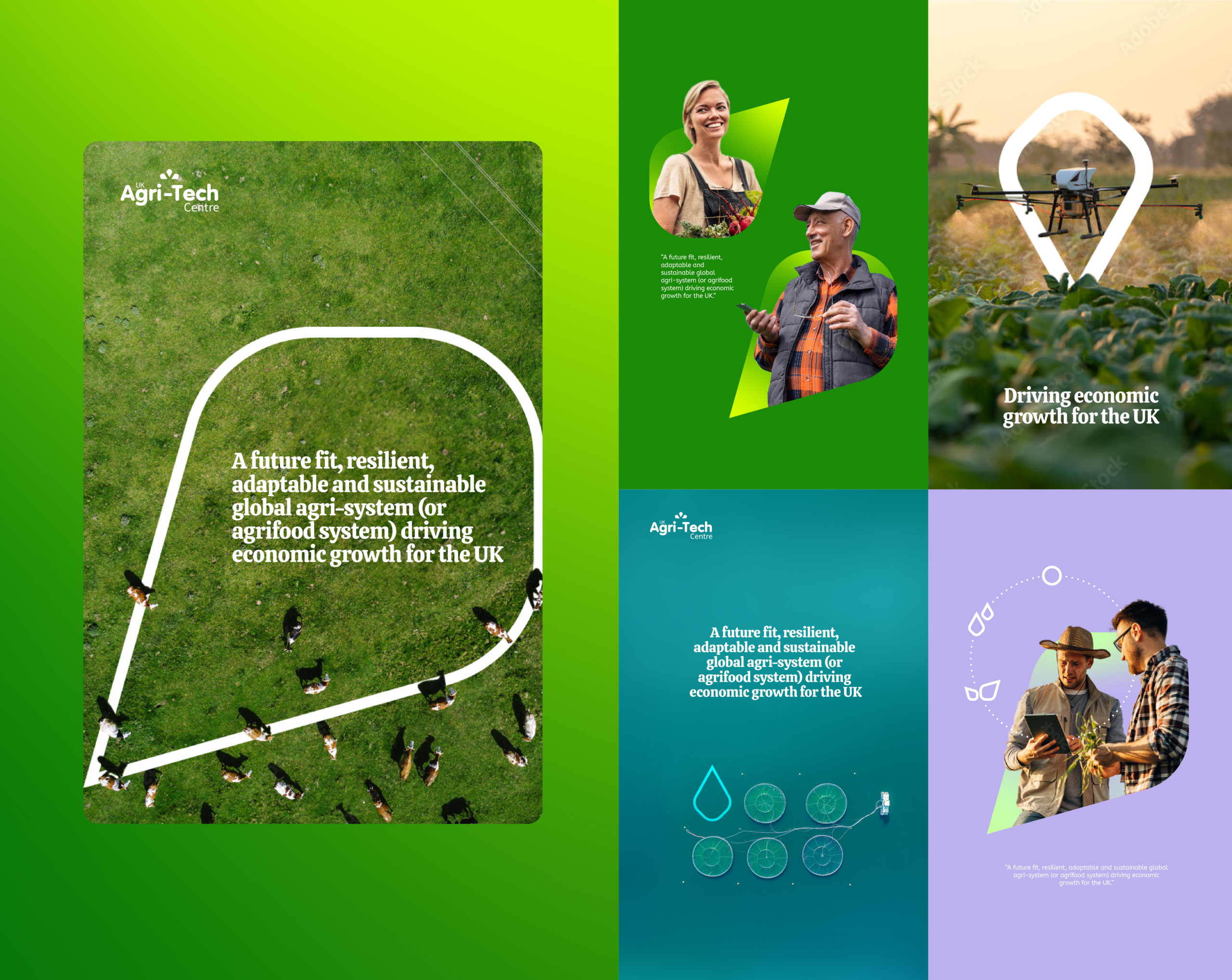
Creating and building a brand and voice for The UK Agri-Tech Centre

Allegory was approached to develop a brand, communications assets and guidelines for a new organisation – the UK Agri-Tech Centre. The centre was formed from the merger of three previous centres. Each one had loyal memberships and complex stakeholder networks. All of these had a significant interest in the launch. Our video received 100% positive feedback from these groups. It describes the UK’s largest independent agri-tech organisation, which has the ambition to become a Catapult. 

We provided strategic communications advice and PR support for the organisation. We helped to communicate the external announcement of the merger (in October 2023). In April 2024, we worked on the launch of the UK Agri-Tech Centre. Both milestones involved extensive liaison with the Agri-Tech’s funding partner, Innovate UK and the Department for Science, Innovation and Technology, with ministerial involvement.

Our response

First, Allegory held an in-depth branding workshop with the client team to develop the new UK Agri-Tech Centre’s core positioning and identify its key audiences. Following the workshop, we crafted a core mission, vision and purpose. We then built a key message house and developed tone of voice guidelines. These steps ensured that all communications were consistent and told a compelling story as the three centres merged to become one organisation.

Working with our partner design agency, Ergo Creative, we designed and delivered core marketing and communications materials. These included a brand strategy playbook, infographics, videos, social media assets, exhibition stand designs, leaflets and other marketing collateral.

Before the merger’s announcement, we partnered with Innovate UK to build a campaign for delivery across the press, social media, and the web. This included a press release and media sell-in, social media posts, a launch video, and a series of blogs to drive interest in the launch and educate key stakeholders about the aims of the new organisation.

A well-planned six-month editorial calendar supported this, along with social media posting guidelines, newsletter guidelines and a template press release. These materials enabled in-house teams to deliver consistent communications and build a steady drumbeat of momentum during the transition period.

Allegory then conducted extensive media research to inform the April launch communications strategy. Identifying a need to educate the farming media and broader community about the fundamentals of agri-tech and how it can help farmers improve profitability and productivity, we created the ‘What is agri-tech?’ campaign. This was delivered through blogs and editorial articles in key agriculture media.

Finally, we commissioned research with agriculture and food sector decision-makers to create content for the April launch. We drafted a report, The Future of UK Agri-Tech, which we launched to the media in April. The report content was also shared across the UK Agri-Tech Centre’s social media and owned channels to build its position as the leading voice on agri-tech in the UK.

The outcome

Allegory secured 30 pieces of quality media coverage, including an interview with Chairman of the UK agri-Tech Centre Peter Quinn on BBC Radio 4’s Farming Today programme. We placed articles about the growth of agri-tech in key vertical titles, including Farmers Weekly and Farmers Guardian.

The launch received 100% positive feedback from stakeholders, including the membership of the three original centres, preserving the heritage and credibility of the merged entities.

Online, the UK Agri Tech Centre quickly established more than 6k followers on LinkedIn. The April launch post generated 200 likes, 31 reposts and 12 comments. All the campaign blogs performed well, including the ‘What is Agri-Tech?’ blog, which received 2,188 views. The UK Agri-Tech Centre is outperforming several well-established peer organisations in the sector in terms of both engagement and new followers. The UK Agri-Tech Centre described these results as “very impressive, and in no small part thanks to the groundwork Allegory put in at the start.

Our campaign branding work has also been awarded the Silver Award for Employer Branding at the London Design Awards 2024.

“The ability of the Allegory team to understand our brief in lightning-quick time – and begin executing our requirements immediately –  was instrumental to the ultimate success of the merger and launch. Their experience in the UK’s innovation landscape and awareness of the needs of different stakeholders – from ministers to farmers – was invaluable. Working with Allegory was a pleasure and when challenges arose, they were always ready with solutions. We have been delighted with the high-quality foundations that Allegory created for ongoing communications activities, and the continuing success of the UK Agri-Tech Centre.”

Phil Bicknell, Chief Executive of the UK Agri-Tech Centre

Don’t get left behind: the race to influence starts now 

Business seems slow for everyone. Politics in every sense of the word is the hold-up, as we wait for the election outcome. 

Patience doesn’t have to equal inertia, though it is tempting in this hot weather.

The reality is that whoever wins the election, the new government will have a post-election pause. It won’t be until late September at the earliest that businesses and organisations can meaningfully interact with those in Whitehall.

If you want to influence the new government on behalf of your community, stakeholders, or industry, what is the best way to plan and prepare this Summer?

Here is a plan of action. While new MPs’ offices and staff laptops are sourced, logins and passwords sorted, and ministerial teams settle in, you can get ready to make an early impact when October rolls around, party conference season begins, and business as usual resumes.

  1. Take this seriously: This is the time to bring together your best minds, develop your best strategic thinking, and create compelling content that evidences it. You want to end up with a ‘fish where the fishes are’ thought leadership plan that covers the rest of 2024. This might be a refined version, or you might need to start from scratch. Either way, get started. 


  2. Make ideas tangible: You need content ready to go at the start of September. You need materials that prompt conversations with different audiences at different points throughout September, October, and beyond. But let’s not get ahead of ourselves. Think about the best way to present your ideas and how to measure impact. Create a content plan. Know what your version of success looks like.


  3. Test and refine: Don’t develop content in an echo chamber. Speak with trusted sources, stakeholders and partners, and experts. Get feedback, test, and iterate. Get people ready to support you publicly because your thought leadership content is so good. 


  4. Work with the media: When the content and advocates are in place, start speaking to the media. Take a slow boil approach, and work with a small number of journalists to craft different story angles that support your overall messaging. Don’t worry if coverage doesn’t land until late September/October. It’s about quality in the right media. 


  5. Get talking: Ideally, you want a drip feed of coverage running from September through October and November. This creates a lasting digital footprint of your thought leadership that others will notice and you can reference. You can use this to great effect during the October party conference season; securing closed conversations and media interviews on-site at the conferences and offsite afterward.

If all this seems a bit much when the sun is shining and England is fighting to stay in the Euros, remember something is always better than nothing. 

In this process, we start clients off with a short, fun ideation session, drawing out their best ideas and talking points, which we research to source internal and external evidence and proof points. If there is more time (and appetite among senior leaders and experts), we host a half-day workshop or deliver a series of 1-2-1 interviews. 

We mine your talent to unearth golden thought leadership nuggets that boost brand awareness, get conversations started, and increase your influence. 

Will you be ready for the dawn of a new government? September comes around quickly and hopefully it’s not just tan lines that make you stand out.

If you would like to find out more about Allegory, please get in touch via bizdev@allegoryagency.co.uk